If you want Hunza at its most beautiful, go in early April for blossom or from mid October to early November for autumn colour. If you want everything open, gentle evenings and the Khunjerab Pass on your plan, go between May and September and accept that July and August are crowded. Winter works only if you are happy with real cold, a short list of open hotels and a very quiet valley.
That is the short version. The longer one depends on who you are travelling with, how many days you have, and your route: a flight to Gilgit or the long drive up the Karakoram Highway. Here is how the year actually plays out in the valley.
Hunza month by month at a glance
| Months | What to expect | Best for |
|---|---|---|
| January and February | Very cold, snow on high ground, many hotels closed | Solitude and winter photography |
| March | Navroz, first blossom in lower villages, cold nights | Flexible travellers who can move dates |
| April | Peak blossom with snow still on the peaks | Couples and photographers |
| May | Fresh green fields, mild days, few crowds | First-timers who want choice of rooms |
| June to August | Warm days, apricot season, everything open | Families and school holidays |
| September | Settled weather, harvest on the terraces | Hikers and Upper Hunza trips |
| October to early November | Gold poplars and crisp nights | Anyone who can choose their dates |
| Late November and December | Cold setting in, places closing | Budget travellers who confirm heating |
Late November to February: winter in Hunza
By the end of November the valley empties. The leaves have dropped, each week is colder than the last and many properties shut for the season. Late November can still be lovely if you catch a clear spell, and the places that stay open are quiet. Khunjerab is generally closed to visitors over winter.
January and February are the coldest months. Nights in Karimabad drop well below freezing, water pipes freeze in some houses, and snow lies on the higher villages and the slopes above them. The Karakoram Highway generally stays open through central Hunza, but snow and rockfall can still close stretches for a day or more, and flights to Gilgit are at their least reliable.
So why go? Because the valley is yours. The forts are quiet, the sky is often painfully clear, and you see Hunza the way locals live it for a third of the year: wood stoves, salt tea, families gathered indoors. In some very cold winters, parts of Attabad Lake freeze over, which draws photographers up from Gilgit.
The catch is accommodation. Many guest houses and hotels close from late November until March. Those that stay open need proper heating, not a small electric heater that dies in the first power cut. Before you book, ask exactly how the room is heated, whether hot water runs all day, and what happens during load shedding. Aliabad is the most practical winter base, with the hospital, banks and the highway right there.
Winter suits photographers and people who have seen Hunza in summer and want the other side of it. It does not suit young children or elderly parents.
March and April: Navroz and blossom season
March: the first blossom
March is a month of change. Early on it still feels like winter. By the third week, apricot and cherry trees in the lower villages start to flower, and Navroz, the spring new year around 21 March, is celebrated across the valley with family gatherings and music.
The blossom climbs the valley over a few weeks, so late March in Aliabad can look very different from late March in Gulmit. Nights are cold and some hotels are only just reopening. Treat March as a month for people with flexible plans rather than fixed holiday dates.
April: peak blossom
If you have seen a photo of white and pink trees in front of snowy peaks, it was probably taken in the first half of April. Blossom usually runs from late March to mid April, depending on the year and the height of the village. Karimabad and Altit tend to flower a little before Gulmit and Passu, so you can sometimes chase the season by moving up the valley.
Days are pleasant and often sunny, and you can walk the lanes of Altit in a light jacket at noon. By evening you will want a fleece and a heater in the room. The peaks still carry winter snow, which is exactly what makes the photographs.
Blossom season has become popular, especially over weekends and long public holidays, so book a room with a view a few weeks ahead. Couples should look at Altit or the upper edge of Karimabad and ask for a terrace facing Rakaposhi or Ladyfinger.
May to August: green fields, apricots and crowds
May: the quiet green month
May is the month most people forget. The blossom has gone, the fields are freshly green, the willows and poplars are in new leaf, and the summer rush has not started. Days are warm enough for longer walks, such as the trail up towards Ultar meadow above Karimabad, and almost every hotel is open again.
Khunjerab Pass is usually open to visitors by late spring, though there can still be deep snow at the top. For a first trip with fair weather, good availability and a little more choice of rooms, May is a strong pick.
June to August: peak summer
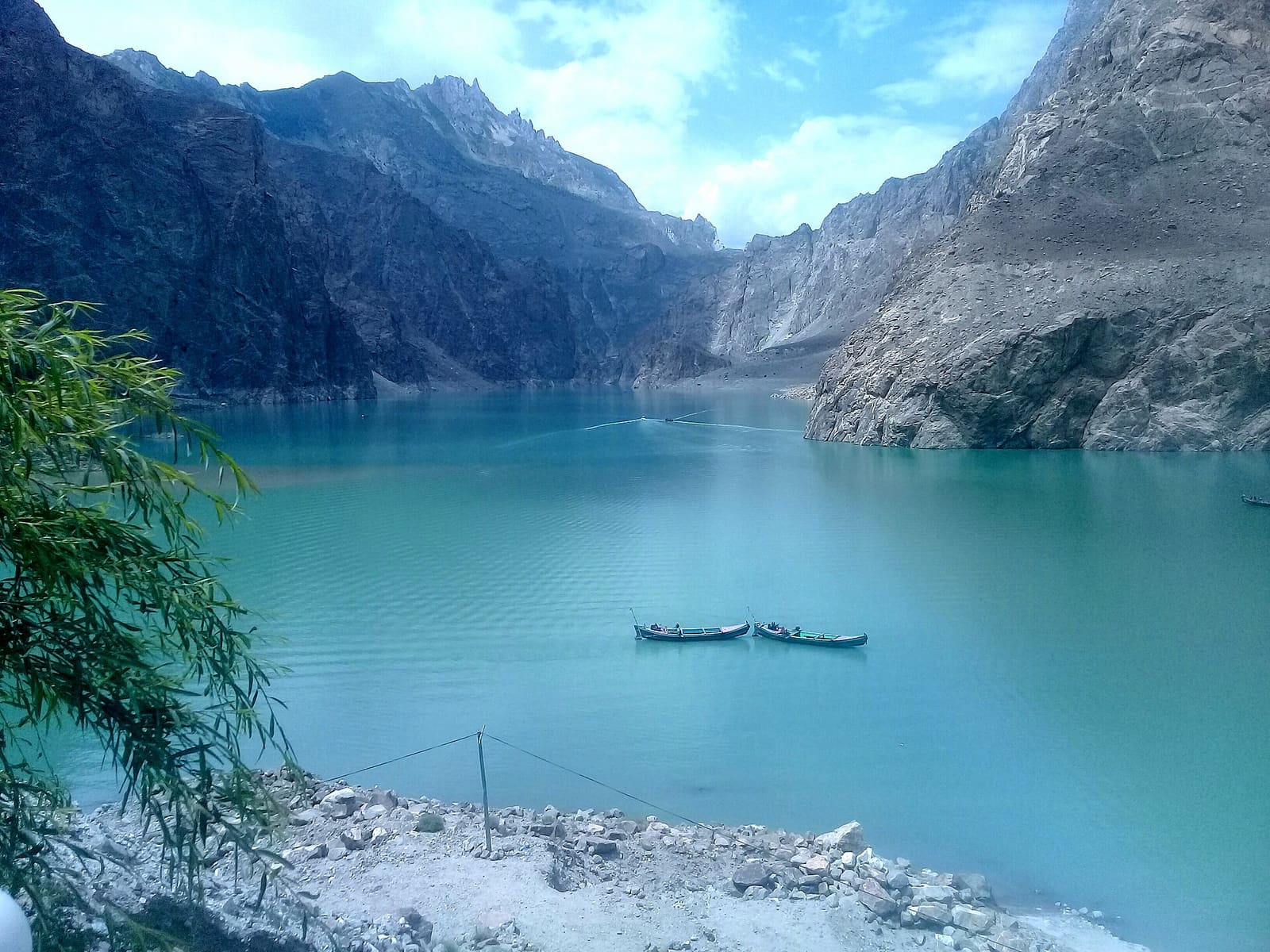
Summer is the season most Pakistani families know. Days are warm in central Hunza and evenings are cool, and everything is running: the forts, the cafés, boats on Attabad Lake, jeep trips to Eagle's Nest at Duikar and the long drive to Khunjerab. Apricots ripen from late June into July, and the orchards around Karimabad hang heavy with fruit.
It is also the busiest time by far. School holidays and Eid send huge numbers of travellers up the Karakoram Highway and over Babusar Pass, which usually opens in June or July. Traffic in Karimabad's narrow lanes crawls in the evening, and the best-placed rooms often go weeks ahead.
Monsoon and the road
Hunza itself is dry and sees little monsoon rain. The trouble lies further south. From July into August, heavy rain in Kohistan and around Babusar can bring landslides and flash floods onto the Karakoram Highway and the N-15, closing them for hours or sometimes days. Cloudy spells also ground flights to Gilgit. Build at least one spare day into a summer trip, and two if you are driving from Islamabad.
Eid and school holidays
If your dates fall on Eid, book early and consider staying in Aliabad or Gulmit rather than the middle of Karimabad. You trade a few minutes of driving for quieter nights and easier parking. Summer is the easiest season for families with small children, because the weather is gentle and every service is open, but choose a property you can drive right up to.
September to early November: harvest and autumn colours
September: calm, clear and underrated
September may be the best month nobody talks about. The summer crowds have gone home, the weather is settled and dry, and the harvest is under way, with wheat and maize being cut on the terraces. Trees at higher elevations begin to turn late in the month.
Hikers like September because the high trails are clear of snow and the light is sharp. It is also a good month for Upper Hunza. Gulmit, Passu, Borith Lake and the Hussaini bridge are pleasant without the summer queues, and Khunjerab is usually still open.
October and early November: peak colour
This is the season photographers plan around. The poplars and apricot trees turn yellow and orange, with the odd deep red, usually at their best from late October into early November. With fresh snow on Rakaposhi and a hard blue sky, central Hunza looks its finest.
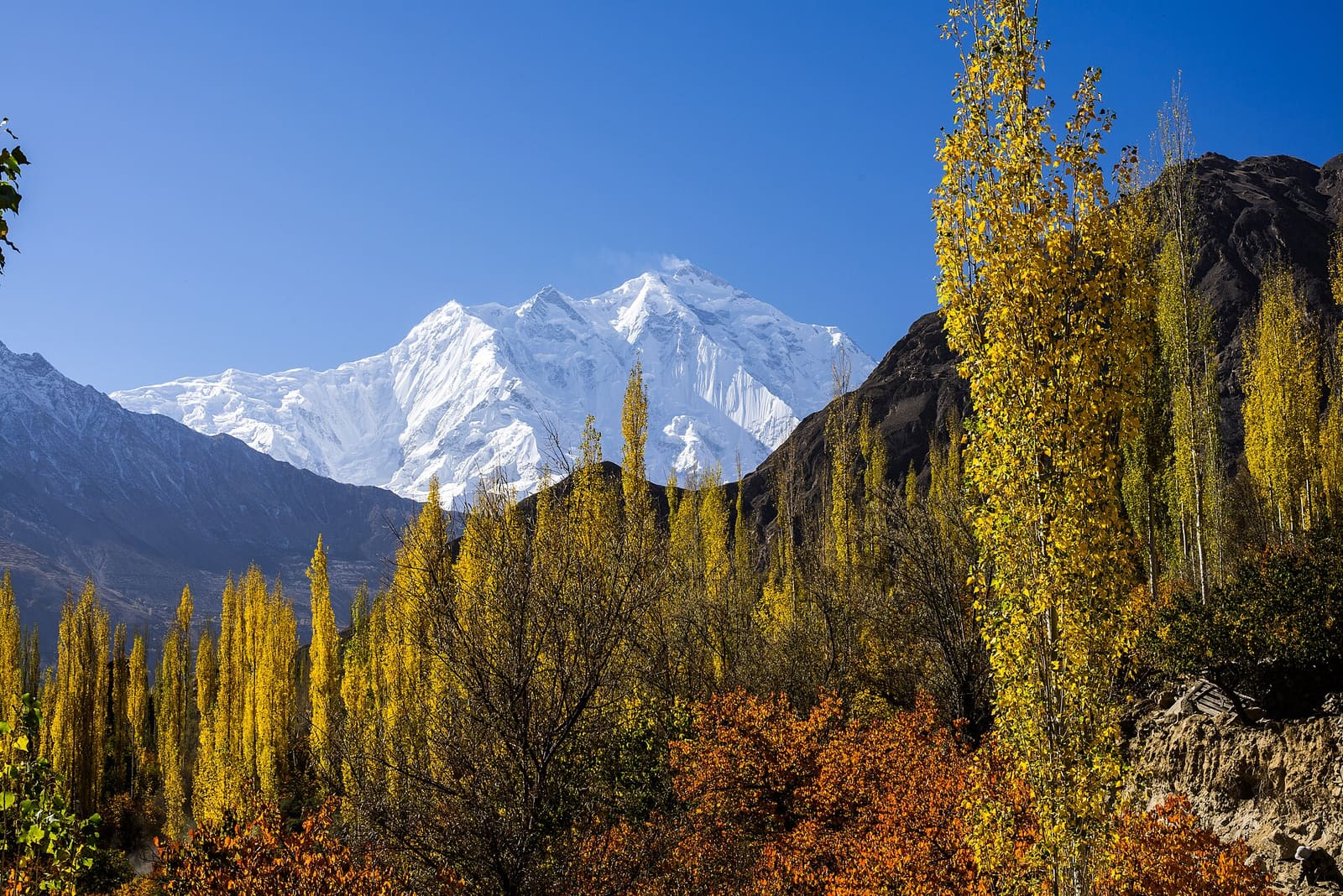
Autumn colour moves through the valley in the opposite direction to blossom. Higher villages like Passu and Gulmit tend to turn first, and Karimabad and Altit follow. Two or three nights in Karimabad and one or two in Gulmit give you a good chance of catching both.
Nights get properly cold by November, and some hotels start closing in the second half of the month. Confirm heating before you book and pack thicker layers than you think you need. Our northern Pakistan packing list covers what to bring for frosty mornings.
Khunjerab Pass: when it is open
Khunjerab, the border crossing with China at around 4,700 metres, is usually open to visitors from late spring to late autumn and closed in winter because of snow. Opening and closing dates are set each year, so check before you build a day around it. Even in June, the top can be snowy and bitterly windy.
The drive from Gulmit takes roughly 3 to 4 hours each way through Sost and Khunjerab National Park. Spend no more than an hour at the top, keep children in the car if the wind is fierce, and turn back if anyone feels dizzy or breathless. Fill the tank in Aliabad or Sost before you set off, as fuel beyond them is scarce.
Where to stay in Hunza in each season
Your base should change with the season more than most guides admit.
- Spring blossom: stay in Altit or in Karimabad, where most of the valley's views and cafés are, and add a night higher up if the lower villages have finished flowering.
- Summer: families do well in Aliabad, right on the Karakoram Highway, with parking at the door and the hospital close by. Groups of friends usually prefer Karimabad for the walkable bazaar.
- Autumn: split the trip between Karimabad and Gulmit in Upper Hunza to see the colours at different heights.
- Winter: Aliabad or lower Karimabad, at a property that confirms heating, hot water and backup power before you pay.
You can compare guest houses and hotels across the valley on the Hunza hotels page on RoomLy and message a property on WhatsApp to ask about heating or road access before you commit.
Getting to Hunza in each season
Flights from Islamabad to Gilgit are the quick option, about an hour in the air, but they need clear weather through the mountains and are often cancelled at short notice, particularly in winter and on cloudy summer days. From Gilgit, central Hunza is about 2 to 3 hours by road.
By road, the Karakoram Highway via Besham and Chilas reaches Gilgit in roughly 14 to 18 hours, so most people break the journey overnight. When Babusar Pass is open, usually from June or July to around October, the route via Naran is often quicker. For a stage-by-stage plan of the drive, read our Karakoram Highway road trip guide.
Frequently asked questions
What is the best month to visit Hunza?
For most people it is April for blossom or late October for autumn colour. If you are travelling with young children or want Khunjerab Pass on the plan, June or September is easier, with everything open and gentler weather.
Is Hunza worth visiting in winter?
Yes, if you are prepared for real cold. The valley is quiet and the light is clear, but many hotels close from late November to March and flights to Gilgit are often cancelled. Book a property that confirms proper heating and hot water, and keep spare days in your plan.
When does cherry blossom season start in Hunza?
Blossom usually appears from late March to mid April. Lower villages such as Aliabad and Karimabad flower first, and the season moves up towards Gulmit and Passu over a few weeks, so the exact timing shifts every year.
When are the autumn colours best in Hunza?
Usually from late October into early November. Villages in Upper Hunza turn a little earlier than Karimabad and Altit, so staying in both areas stretches your chances.
Is Khunjerab Pass open in April?
Sometimes, but do not count on it. The pass usually opens to visitors in late spring and closes in late autumn, with dates set each year. Check before you travel, and expect snow at the top even after it opens.