Hotel
Daman Heights Hotel
Verified by Roomly
Upscale hotel in Blue Area, minutes from Blue Area offices.
- Free Wi-Fi
- Free parking
- Generator / UPS backup
- Family-friendly
Excellent
9 reviews
Islamabad Capital Territory
12 places to stay · A green, orderly capital with hiking trails starting at the edge of town
Upscale hotel in Blue Area, minutes from Blue Area offices.
Family-run guest house in G-9 with friendly hosts, close to Blue Area offices.
Furnished apartments with a kitchen in E-11, close to Daman-e-Koh.
Comfortable hotel in F-6, minutes from the Margalla Hills trails.
Furnished apartments with a kitchen in F-7, close to Jinnah Super market.
Family-run guest house in F-10 with friendly hosts, close to Faisal Mosque.
Furnished apartments with a kitchen in Blue Area, close to Daman-e-Koh.
Family-run guest house in F-7 with friendly hosts, close to Jinnah Super market.
Comfortable hotel in G-9, minutes from Daman-e-Koh.
Comfortable hotel in F-10, minutes from the Margalla Hills trails.
Family-run guest house in E-11 with friendly hosts, close to Jinnah Super market.
Family-run guest house in F-6 with friendly hosts, close to Daman-e-Koh.
Tell us what you need and we'll arrange rooms, negotiate rates and send one invoice. Free for you.
Islamabad travel guide
Islamabad is Pakistan's planned capital, laid out in a grid of sectors beneath the Margalla Hills. It is clean, green and easy to get around, and most visitors find it the least stressful city in the country. Mornings on the Margalla trails, evenings at Daman-e-Koh and Faisal Mosque at sunset are the classic experiences, and the city makes a comfortable starting point for trips to Murree and the north.
The sector system makes choosing a base simple. Blue Area, F-6 and F-7 are central, close to offices, embassies and the best-known markets, and suit business travellers and short stays. F-10, E-11 and G-9 are more residential, with guesthouses that work well for families, longer stays and anyone visiting relatives in the city or in Rawalpindi.
Islamabad is pleasant for most of the year. Spring and autumn are the highlights, summer is hot, and winters are cool with cold nights but rarely severe. Because the city is a government and diplomatic centre, official events can bring road closures at short notice, so leave extra time on days with major functions.
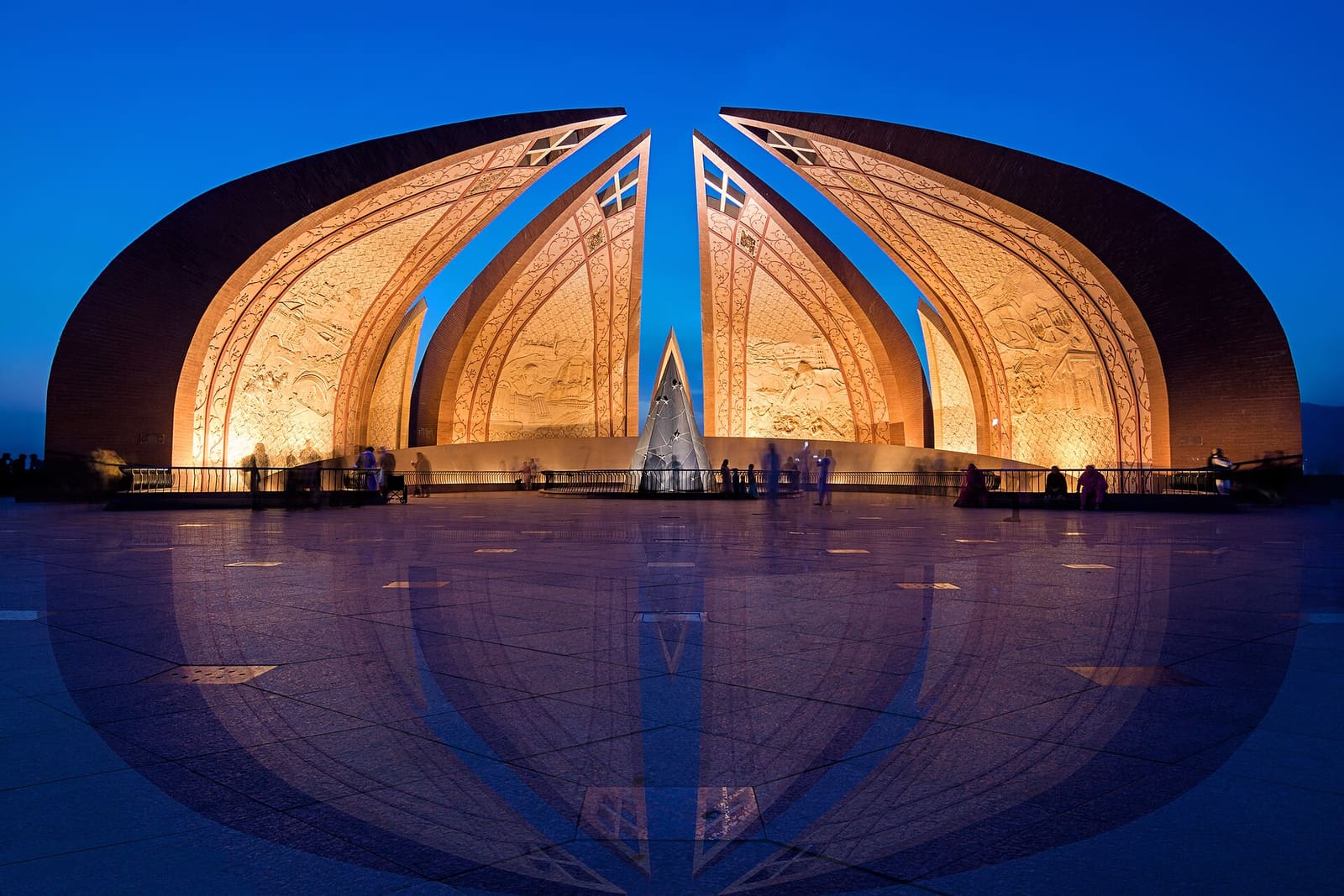
Pakistan Monument at blue hour, Islamabad
Muhammad Ashar · CC BY-SA 4.0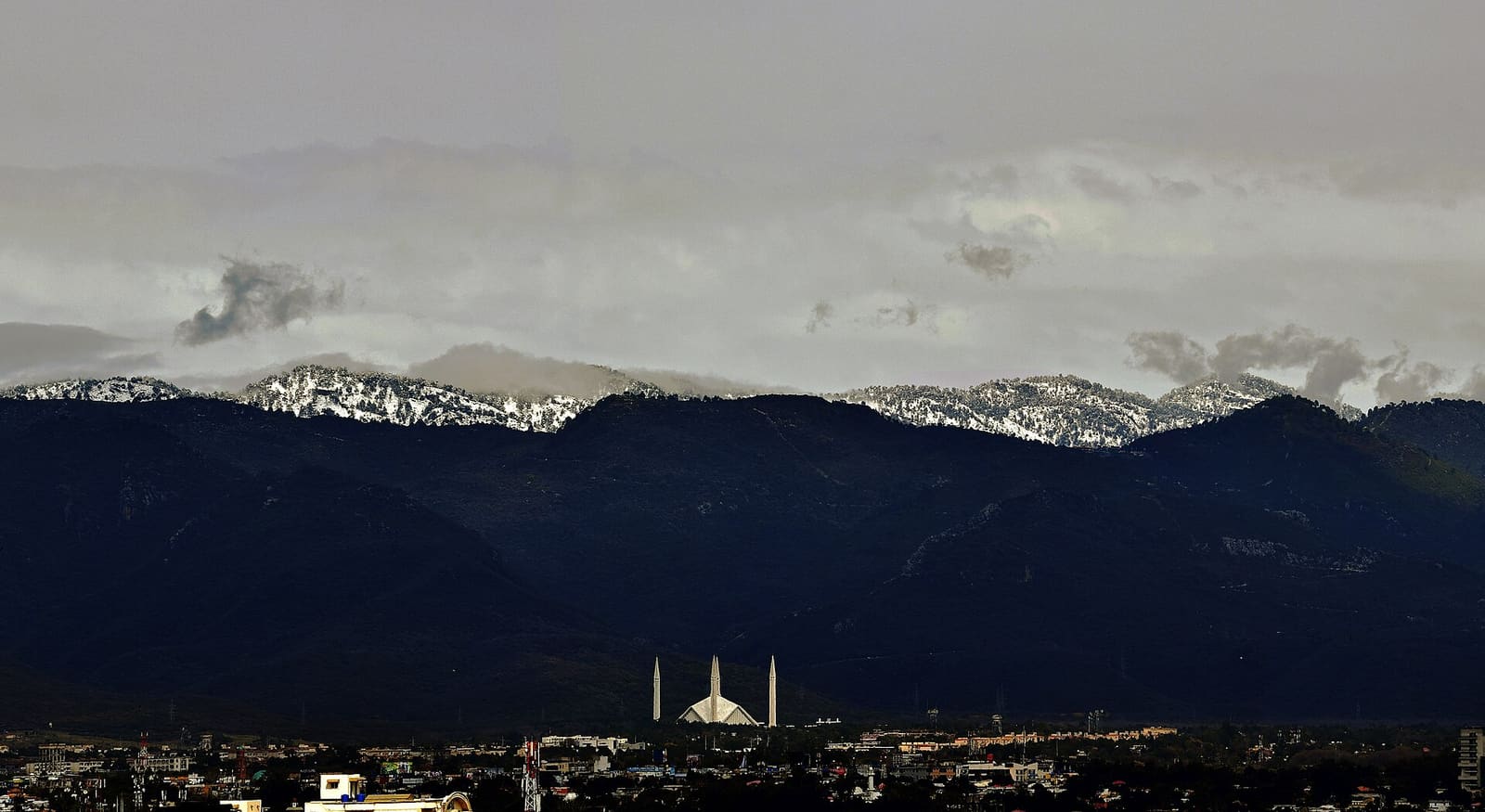
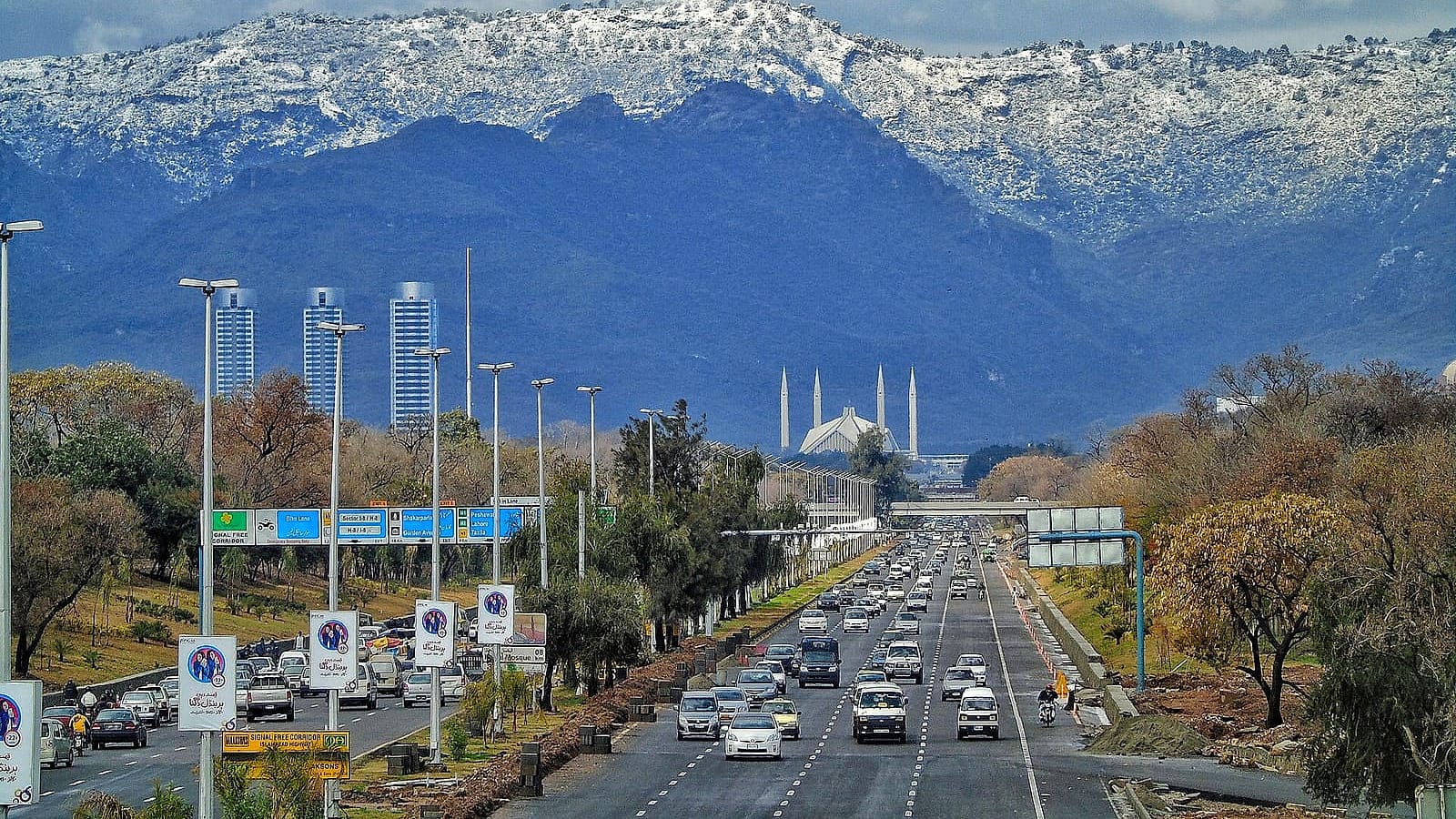
Snow on the Margalla Hills above Islamabad
Ali Mujtaba · CC BY-SA 4.0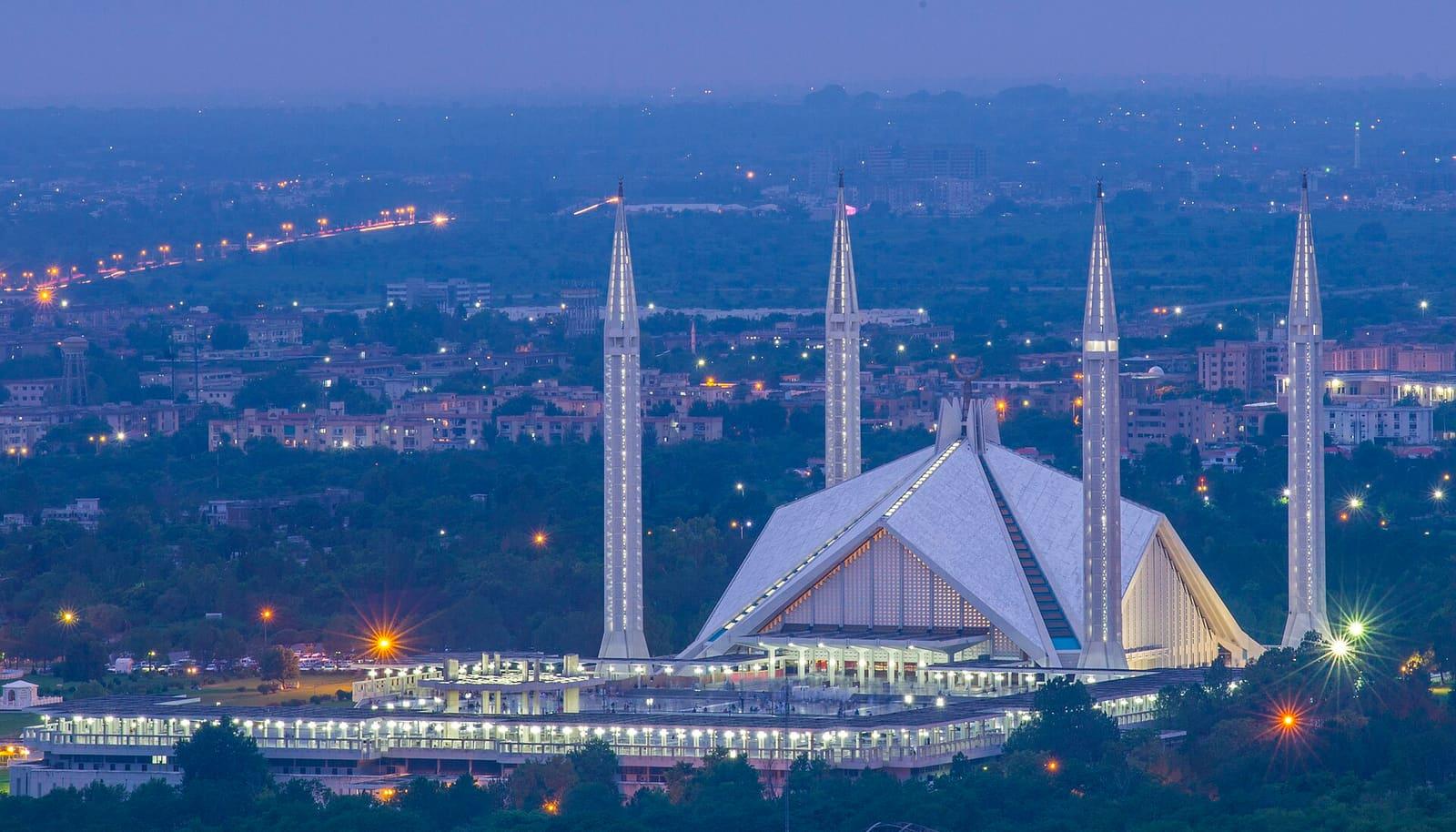
Faisal Mosque seen from Daman-e-Koh
Abdul Baqi · CC BY-SA 3.0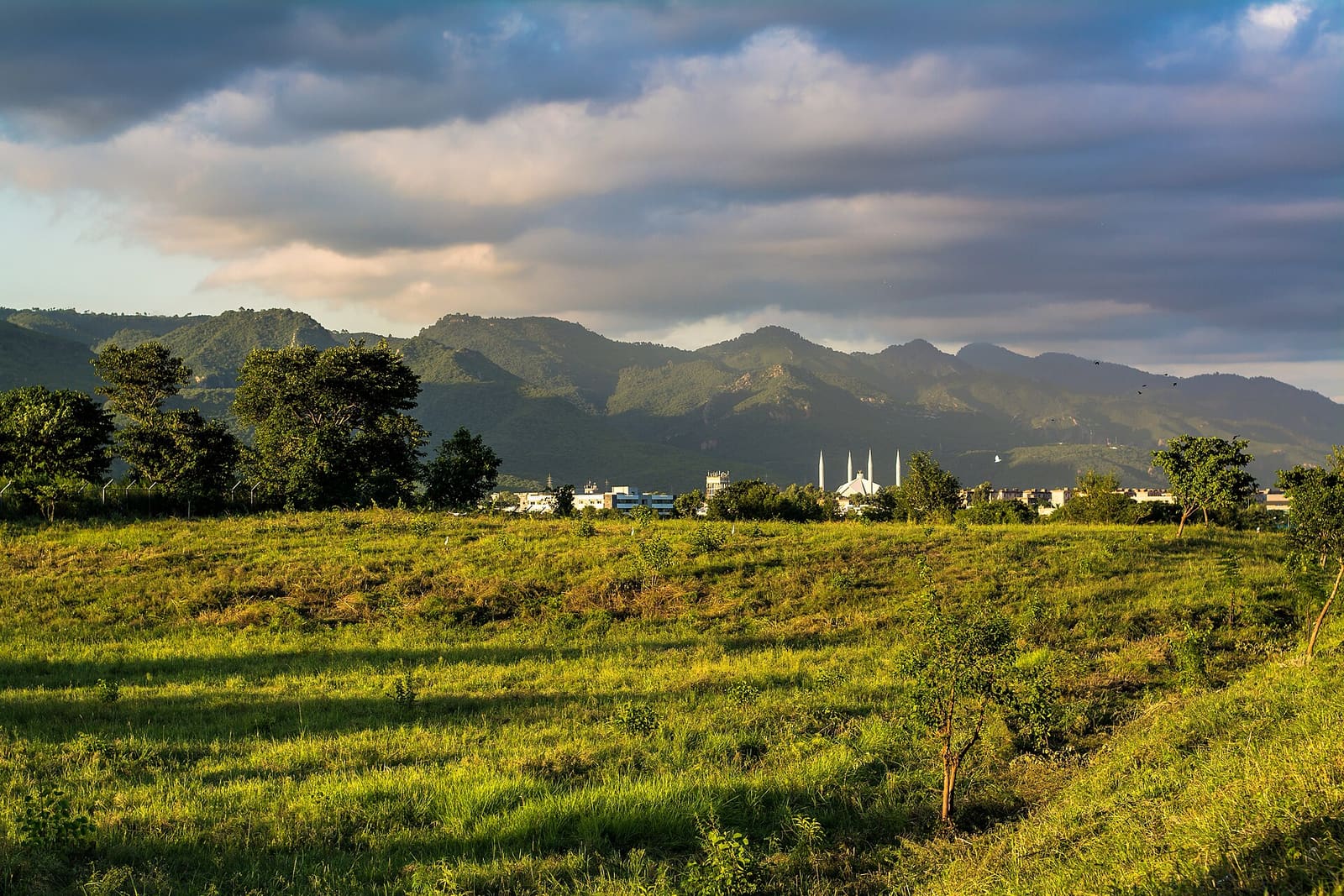
Green hills of Islamabad after rain
Moiz.ismaili · CC BY-SA 3.0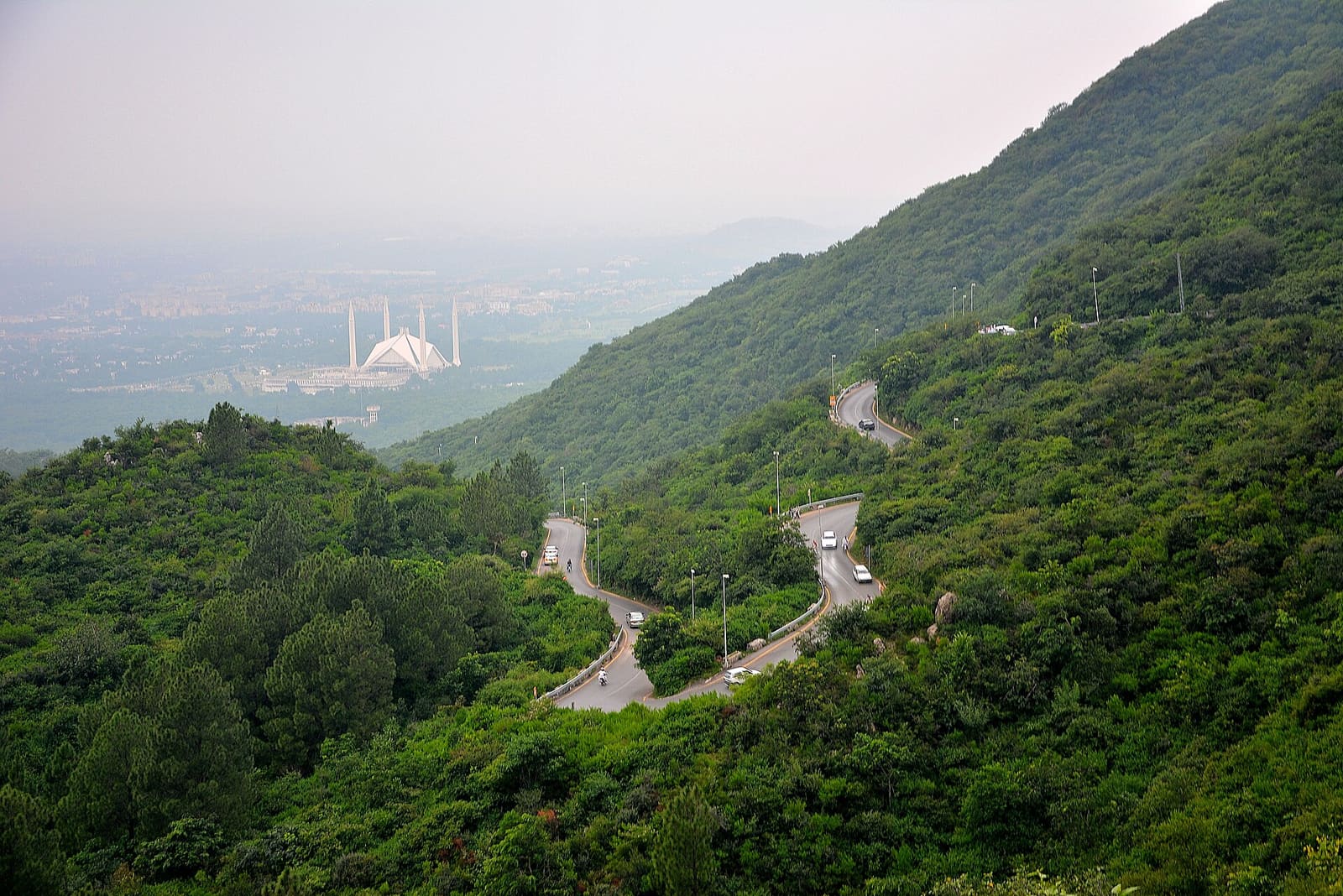
Faisal Mosque and the city from the Margalla Hills
Obaid747 · CC BY-SA 3.0Each area suits a different kind of trip. Here's how they compare.
Best for: Business travellers and short stays
Blue Area runs along Jinnah Avenue and is the city's main commercial strip, with offices, banks and corporate hotels. It is central for government offices and the Constitution Avenue end of the city. Evenings are quiet here compared with the markets, so many guests head to F-6 or F-7 for dinner.
Hotels in Blue Area →Best for: Embassy visits, cafés and walkable evenings
F-6 is one of the city's oldest and leafiest sectors, home to Super Market and the cafés around Kohsar Market. It is close to the Diplomatic Enclave and a short drive from Daman-e-Koh, and Trail 3 starts at its edge on Margalla Road. Guesthouses here are popular with foreign visitors and NGO staff.
Hotels in F-6 →Best for: Shopping, dining and central location
F-7 centres on Jinnah Super Market, with bookshops, restaurants and boutiques. It is well placed for Faisal Mosque and Blue Area. Streets are calm and residential behind the market, which makes it a good all-round base.
Hotels in F-7 →Best for: Families and longer stays
F-10 is a residential sector with its own busy markaz for shopping and food. Guesthouses here are often in converted homes with more space, which suits families. It is about 15 to 20 minutes from Blue Area and handy for the motorway towards Lahore and Peshawar.
Hotels in F-10 →Best for: Quiet stays and airport access
E-11 is a newer sector at the western end of the city, close to the Margalla foothills and Golra. It is one of the closer sectors to the Srinagar Highway that leads to Islamabad International Airport. Expect quieter streets and plenty of family-run guesthouses.
Hotels in E-11 →Best for: Value stays and Rawalpindi connections
G-9 is a lively, practical sector known for Karachi Company market and its food stalls. It sits between the city centre and the routes towards Rawalpindi, so it suits travellers visiting both cities. It is busier and less polished than the F sectors.
Hotels in G-9 →March to April and October to November are the best months for Islamabad, though it is comfortable for much of the year.
Warm days, flowering trees and perfect hiking weather. Pollen counts are high in spring, so travellers with allergies should come prepared.
Hot, with afternoon temperatures that make hiking hard after mid-morning. Eid holidays in summer fill hotels with travellers heading to Murree and the north.
Heavy rain, green hills and humid air. Storms can cause brief flooding in some sectors and landslides on roads into the hills.
Clear, crisp autumn days are ideal for the trails. Winter brings cold mornings and nights, so check that your room has heating, and fog occasionally affects early flights.
The city's landmark mosque, with its tent-like design and tall minarets against the Margalla Hills. Visit outside prayer times and dress modestly.
Trails 3, 5 and 6 start from the edge of the F and E sectors and climb into the national park. Start early, carry water and stick to marked paths.
A viewpoint on the Margalla Hills overlooking the city grid and Faisal Mosque. It is especially popular at sunset.
The petal-shaped monument at Shakarparian represents the country's provinces and territories. The museum beside it tells the story of the independence movement.
The national heritage museum, with crafts, costumes, music and architecture from every region. A good introduction before travelling further in Pakistan.
An old village at the foot of the hills with a restored temple, small galleries and restaurants. It is most pleasant in the evening.
A reservoir on the city's eastern side with a large park, boating and space for children. A relaxed outing for families on weekends.
In the G-6 area near Aabpara, this is one of the city's older food streets, with karahi, barbecue and fried fish in the cooler months. It is busiest from about 8 at night onwards.
The stalls around this market are where students and office workers eat: samosas, chaat, rolls, fresh juice and late tea. Go in the evening and graze rather than sitting down for one meal.
Chicken pulao served with shami kebabs and raita is the twin cities' favourite lunch, quick and filling. Look for it at midday in almost any markaz.
With a big Pashtun community in the city, the chapli kebab and the simple tomato, salt and mutton karahi are done very well here. Winter evenings are the time for them.
On Friday and weekend mornings the markazes of F-10, I-8 and G-9 fill with families queuing for halwa puri, naan chanay and paratha. Get there before 10 or the best spots run out.
Often called the Sunday Bazaar, it is open several days a week and busiest on Sundays. Go for seasonal fruit, dry fruit and street snacks, and take a bag of your own.
Places to stay in Islamabad on Roomly start from PKR 5,000 a night, and a typical night costs around PKR 13,250. Guest houses average about PKR 6,000. Rates change with the season and holidays, so confirm the final price with the property on WhatsApp.
Roomly lists 12 hotels, guest houses and apartments in Islamabad, 9 of them verified by our team. You can message any of them directly on WhatsApp with no booking fee.
F-6 and F-7 are the most popular all-round bases, close to markets, restaurants and the Margalla trails. Blue Area suits business trips, while F-10 and E-11 offer quieter, roomier guesthouses for families.
Islamabad International Airport is west of the city, and the drive to the central sectors usually takes about 30 to 45 minutes. Allow more time at rush hour or when official events cause road closures.
Yes. Murree is roughly an hour away on the expressway, and the Hazara Motorway leads towards Naran, Swat and the Karakoram Highway. Most flights to Gilgit and Skardu also leave from Islamabad.
One or two days are enough to see Faisal Mosque, Daman-e-Koh, the Pakistan Monument and Lok Virsa and to walk one Margalla trail. Add a day for Taxila or Rawalpindi's bazaars.
Islamabad is generally regarded as one of the safest and most orderly cities in Pakistan. Normal precautions apply: use registered taxis or ride-hailing apps at night and keep ID with you for checkpoints.