

Hotel
Abdali Road Inn
Verified by Roomly
Comfortable hotel in Cantt, minutes from Bosan Road.
- Free Wi-Fi
- Free parking
- Breakfast included
- Generator / UPS backup
Exceptional
15 reviews
Punjab
10 places to stay · Sufi shrines, blue tilework, sohan halwa and the sweetest mangoes in Punjab
Comfortable hotel in Cantt, minutes from Bosan Road.
Furnished apartments with a kitchen in Cantt, close to Multan airport.
Family-run guest house in Gulgasht with friendly hosts, close to Hussain Agahi bazaar.
Upscale hotel in Cantt, minutes from Multan airport.
Comfortable hotel in Cantt, minutes from the shrine of Shah Rukn-e-Alam.
Comfortable hotel in Gulgasht, minutes from Hussain Agahi bazaar.
Furnished apartments with a kitchen in Gulgasht, close to Hussain Agahi bazaar.
Comfortable hotel in Gulgasht, minutes from the shrine of Shah Rukn-e-Alam.
Family-run guest house in Gulgasht with friendly hosts, close to the Cantt.
Family-run guest house in Cantt with friendly hosts, close to Bosan Road.
Tell us what you need and we'll arrange rooms, negotiate rates and send one invoice. Free for you.
Multan travel guide
Multan is one of the oldest cities in the subcontinent and is known as the City of Saints for its many Sufi shrines. The great tombs of Shah Rukn-e-Alam and Bahauddin Zakariya rise above the old fort area, and the city's blue glazed tiles, pottery and sohan halwa are famous across Pakistan. It is also the heart of mango country, with the best fruit in summer.
Most hotels are in Cantt or around Gulgasht. Cantt is close to the railway station and the airport and has an orderly feel, while Gulgasht is a mixed residential and commercial area with markets and restaurants. Both are a short drive from the shrines and the old city.
Multan is famously hot, and summer temperatures are among the highest in the country. The cooler months from November to February are the best time to visit, though dense fog can disrupt roads and flights in December and January.
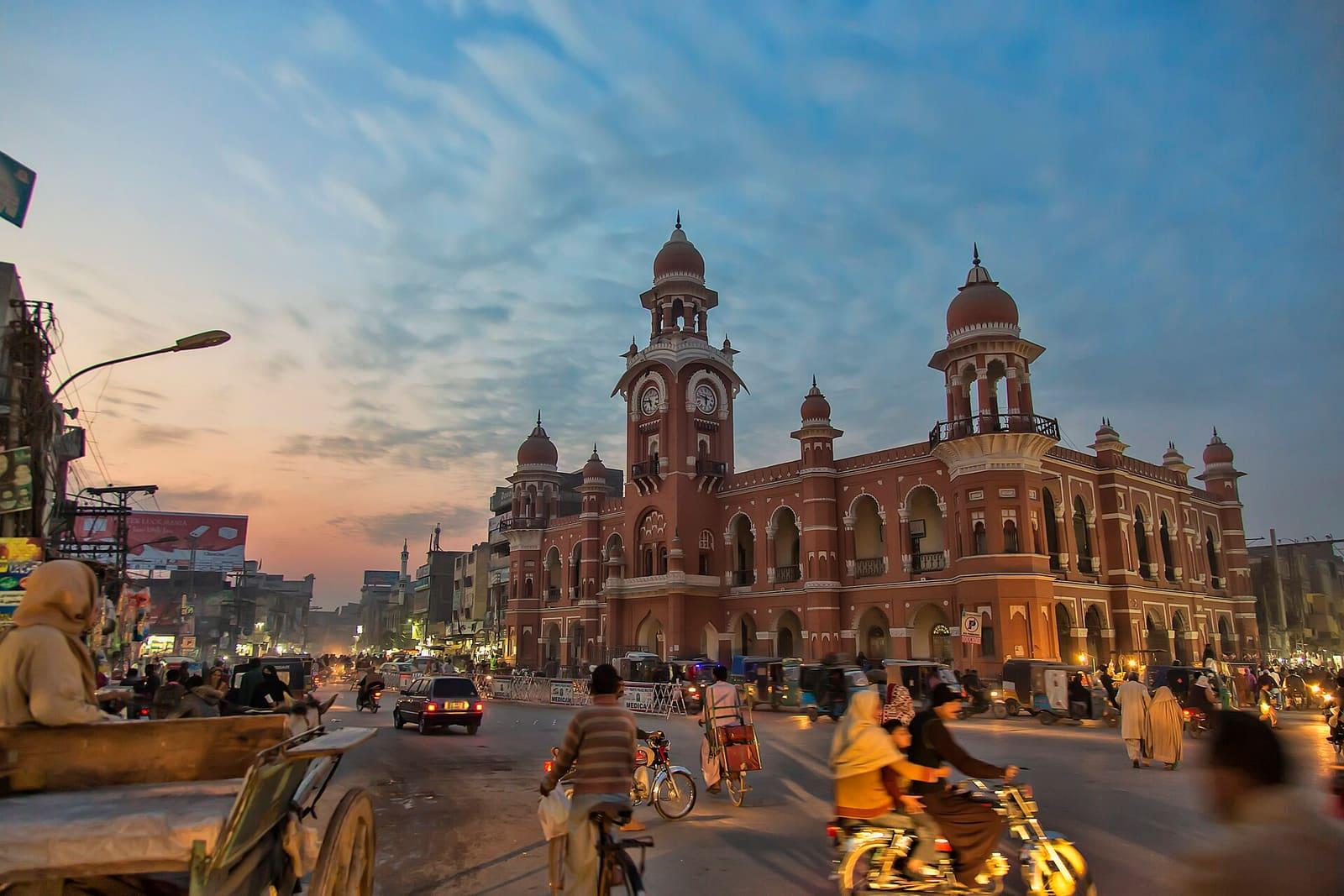
Ghanta Ghar clock tower, Multan
Tahsin Shah · CC BY-SA 4.0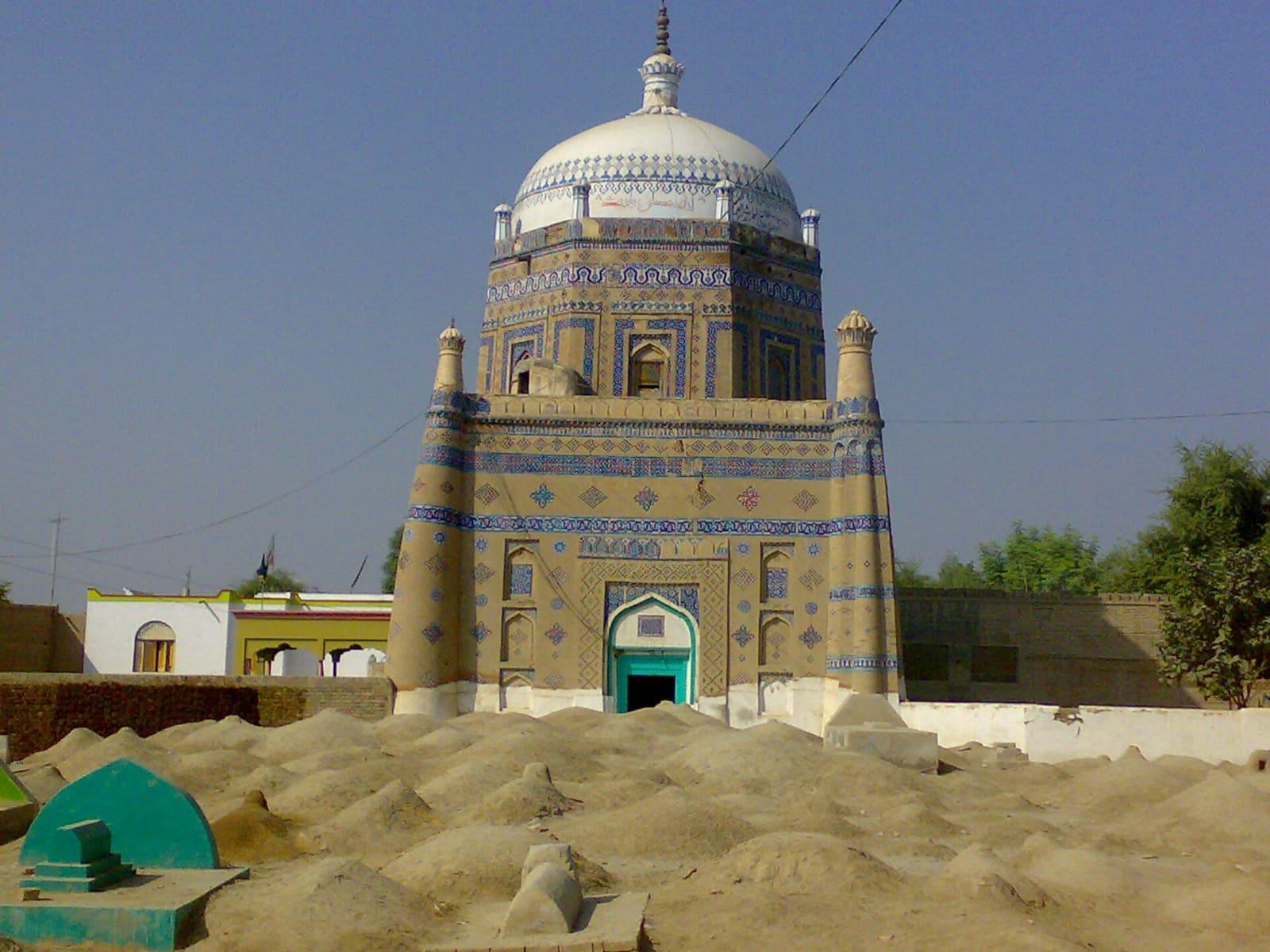
Blue-tiled shrine near Multan
Musab Bin Noor · CC BY-SA 3.0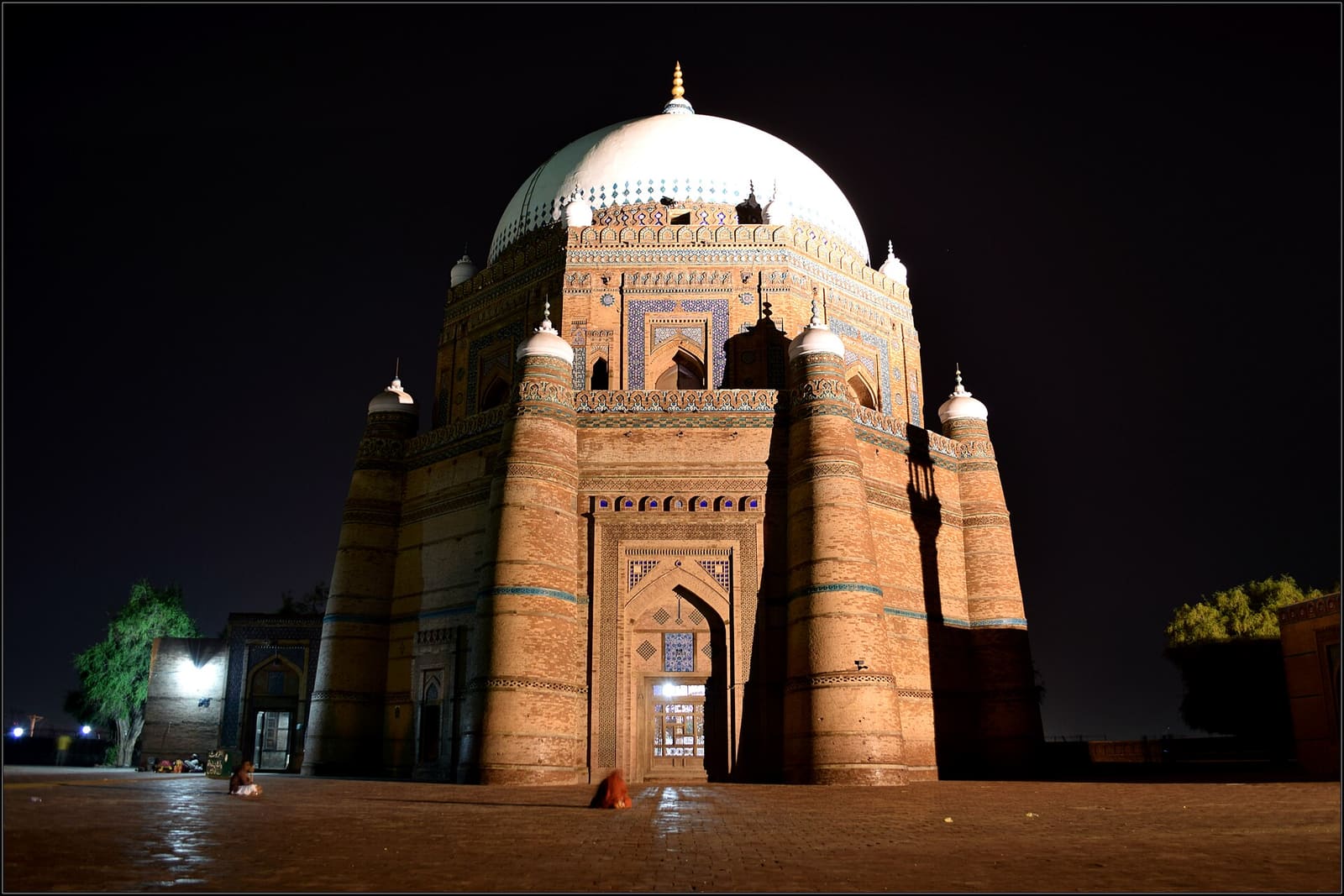
Tomb of Shah Rukn-e-Alam at night
Junaidali88z · CC BY-SA 3.0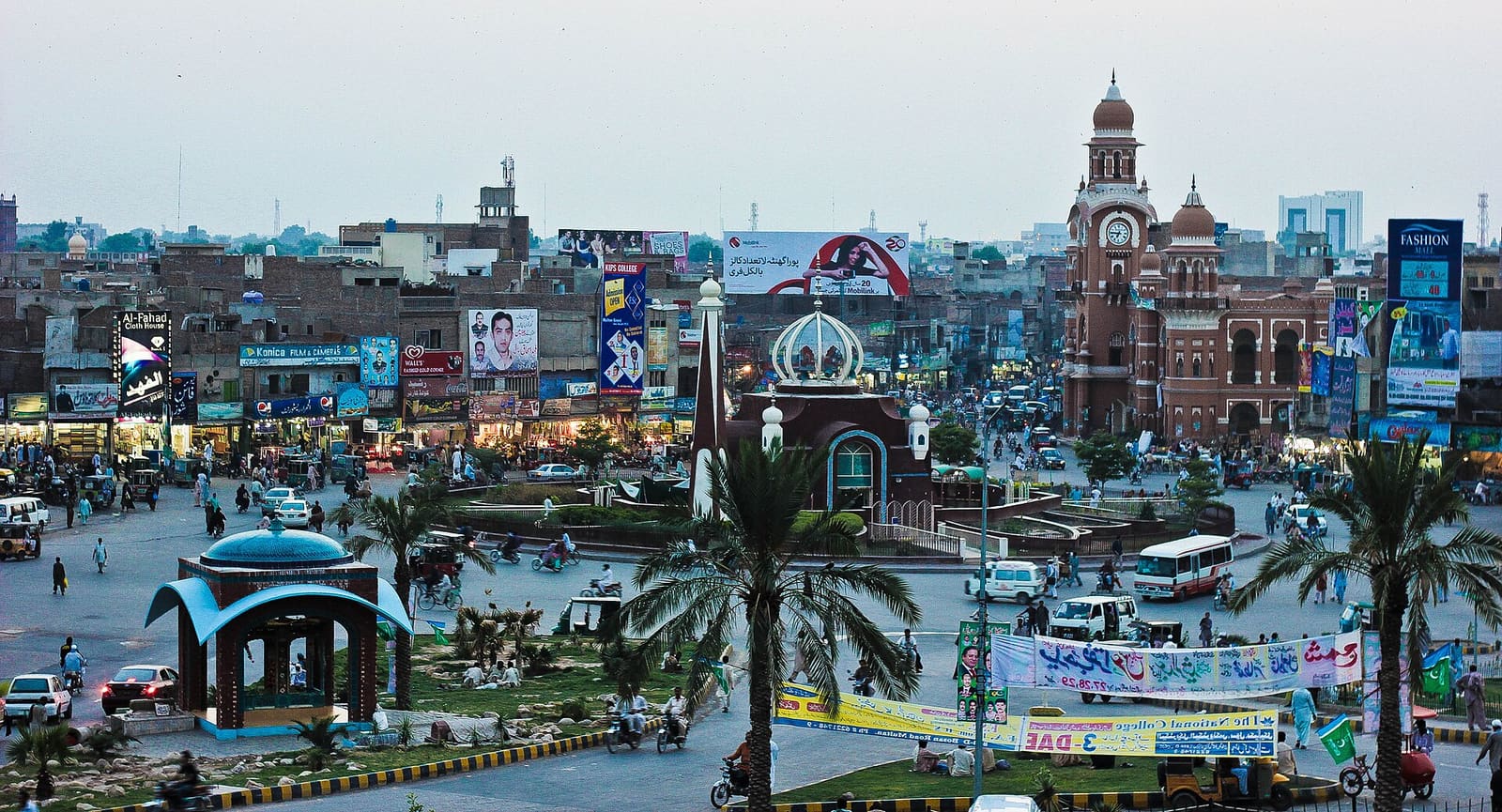
Ghanta Ghar square, Multan
Mubashirtaqi147 · CC BY-SA 3.0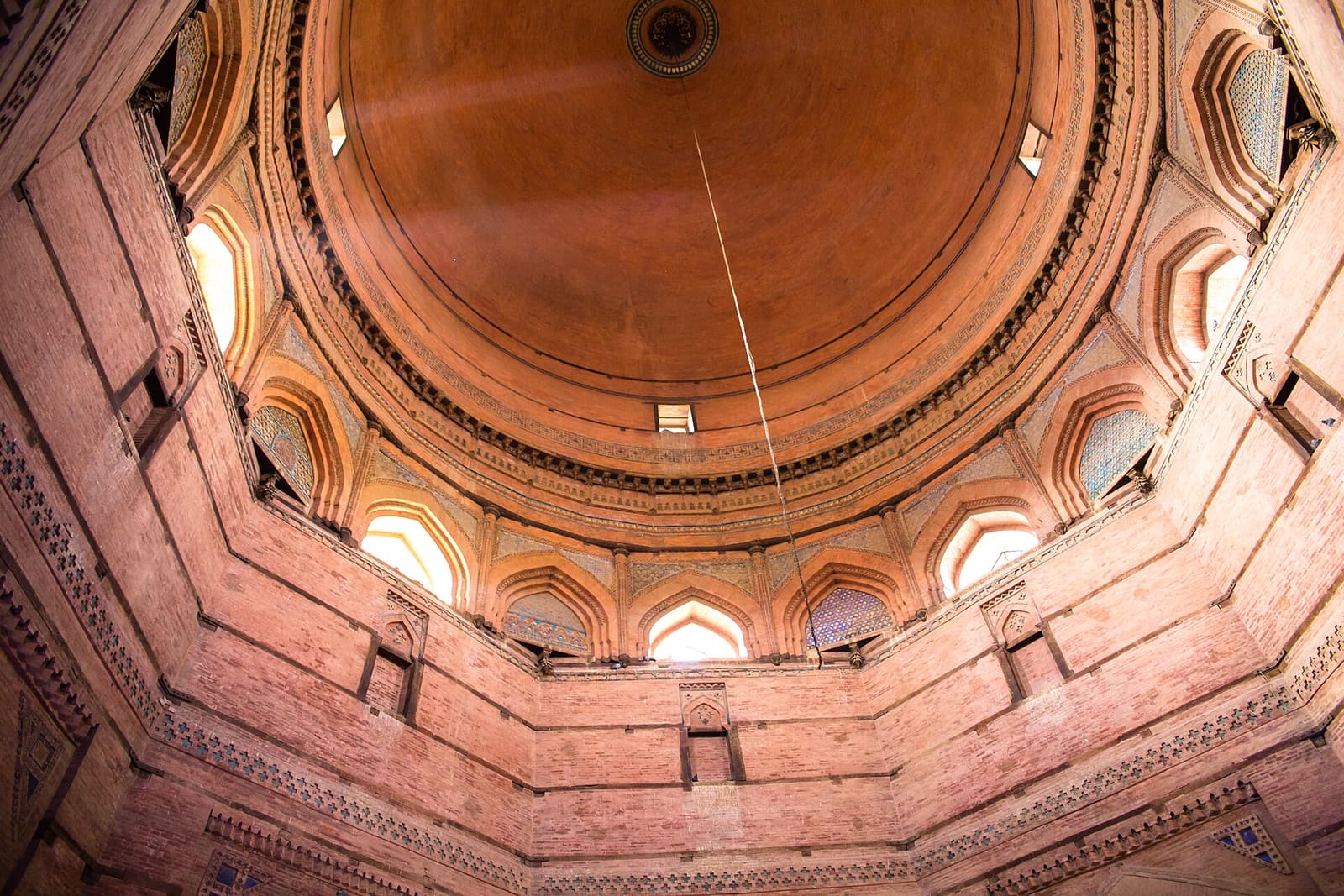
Inside the dome of Shah Rukn-e-Alam
Smjunaid123 · CC BY-SA 3.0Each area suits a different kind of trip. Here's how they compare.
Best for: Business travellers and rail or air access
Multan Cantonment is tidy and green, close to Multan Cantt railway station and the airport. It has shops and restaurants and calmer traffic than the old city. It suits business travellers and families who want an easy, orderly base.
Hotels in Cantt →Best for: Families, shopping and food
Gulgasht is a busy residential and commercial area with markets, restaurants and easy access to Bosan Road. It is a short drive from the shrines and the old city. It suits families and visitors who want local life and plenty of food options.
Hotels in Gulgasht →November to February is the best time to visit Multan, though June to August is mango season.
Pleasant days and cool nights, ideal for visiting the shrines and bazaars. Dense fog in December and January can delay flights and close motorways in the early morning.
Warming quickly, but still comfortable in the mornings and evenings.
Extremely hot, often over 45°C in June, with dust storms at times. Mango season peaks in June and July. Choose a hotel with strong air conditioning and backup power.
Cooling down, with clear skies and fewer crowds.
A magnificent 14th-century tomb with a vast brick dome and blue tilework, one of the finest monuments in Pakistan.
The tomb of the 13th-century Sufi saint, close to Shah Rukn-e-Alam's shrine in the old fort area.
A green-domed shrine with fine tilework, dedicated to a revered Sufi.
The clock tower in the old city and the busy bazaar nearby, good for pottery, textiles and sohan halwa.
Visit workshops and shops selling the city's distinctive blue glazed pottery and tiles.
In summer, the orchards around Multan are heavy with fruit, and roadside stalls sell mangoes everywhere.
Multan's famous sweet is dense and caramelised, made with wheat, milk, sugar and ghee and topped with nuts. Buy it fresh around Hussain Agahi and the old city, as it keeps well for the journey home.
Chaunsa, Anwar Ratol and Dusehri are the varieties to know, with the season running from June into August and peaking in June and July. Eat them chilled, and buy in boxes from established stalls if you want to take some home.
The small purple phalsa berry makes a sharp, cooling drink in early summer, usually May and June. Look for it at juice stalls around the old city.
Sugarcane juice, lassi and sattu, a drink made with roasted gram flour, keep Multan going through the hot months. They are sold from roadside carts all day.
Halwa puri, chanay and lassi near Ghanta Ghar are a good start before visiting the shrines. Go early, between 7 and 9.
Most of the city's family dining happens in this part of town, with barbecue, karahi and dessert shops open late. It is where Multanis go when the day's heat finally breaks.
Places to stay in Multan on Roomly start from PKR 3,000 a night, and a typical night costs around PKR 10,250. Guest houses average about PKR 4,000. Rates change with the season and holidays, so confirm the final price with the property on WhatsApp.
Roomly lists 10 hotels, guest houses and apartments in Multan, 3 of them verified by our team. You can message any of them directly on WhatsApp with no booking fee.
Cantt is the most orderly area, close to the railway station and airport. Gulgasht is busier, with markets and restaurants, and is a short drive from the shrines.
Multan is famous for its Sufi shrines, blue glazed pottery and tiles, sohan halwa and mangoes. It is also one of the oldest cities in South Asia.
November to February is the most comfortable time, with mild days. Summer is extremely hot but is mango season, and winter fog can affect early travel.
Multan is about 4 to 5 hours from Lahore by road via the M-3 and M-4 motorways. Flights and trains also connect the two cities.
One or two days are enough to see the main shrines, the old city and the bazaars. Add a day if you want to visit nearby towns or orchards.


