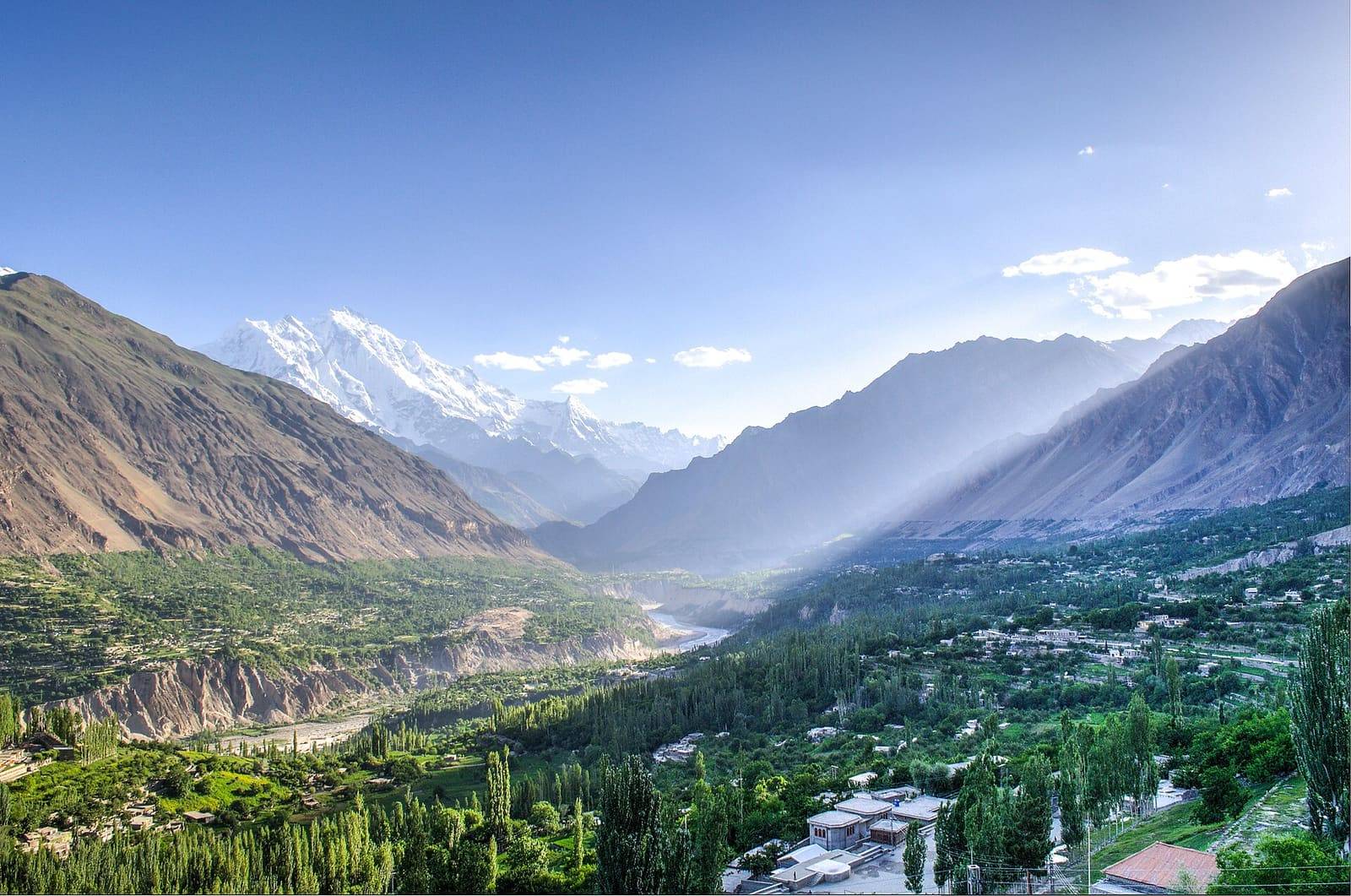

Guest house
Ultar View Guest House
Verified by Roomly
Family-run guest house in Karimabad with friendly hosts, close to the Duikar viewpoint.
- Free Wi-Fi
- Free parking
- Generator / UPS backup
- Heating
Very good
16 reviews
Gilgit-Baltistan
12 places to stay · Orchard villages, centuries-old forts and a ring of 7,000-metre peaks
Family-run guest house in Karimabad with friendly hosts, close to the Duikar viewpoint.
Peaceful resort in Gulmit with open views, a short drive from the Duikar viewpoint.
Comfortable hotel in Karimabad, minutes from Baltit Fort.
Family-run guest house in Altit with friendly hosts, close to Altit Fort.
Upscale hotel in Aliabad, minutes from Baltit Fort.
Family-run guest house in Karimabad with friendly hosts, close to Baltit Fort.
Furnished apartments with a kitchen in Aliabad, close to Altit Fort.
Comfortable hotel in Gulmit, minutes from Attabad Lake.
Family-run guest house in Aliabad with friendly hosts, close to Attabad Lake.
Comfortable hotel in Altit, minutes from the Duikar viewpoint.
Peaceful resort in Gulmit with open views, a short drive from Altit Fort.
Family-run guest house in Altit with friendly hosts, close to the Duikar viewpoint.
Tell us what you need and we'll arrange rooms, negotiate rates and send one invoice. Free for you.
Hunza travel guide
Hunza is the valley most people picture when they think of northern Pakistan. Terraced fields and apricot orchards climb the slopes beneath Rakaposhi, Ultar Sar and Ladyfinger, and the old forts at Baltit and Altit look down over the river. It is also one of the friendliest and most welcoming places in the country, with a strong tradition of hospitality and high literacy.
Central Hunza, around Karimabad, Altit and Aliabad, is the main base, with the forts, the bazaar and the best views. Upper Hunza, also called Gojal, begins beyond Attabad Lake and includes Gulmit and Passu. Many visitors split their stay between the two: a few nights in Karimabad for the forts and viewpoints, then Gulmit for the Passu Cones, the Hussaini bridge and the road to Khunjerab.
Hunza is a year-round destination, but each season feels different. Spring brings blossom, summer is busy and green, autumn turns the poplars gold, and winter is cold and quiet with many hotels closed. Getting there takes time, by road or a weather-dependent flight to Gilgit, so allow buffer days in your plans.
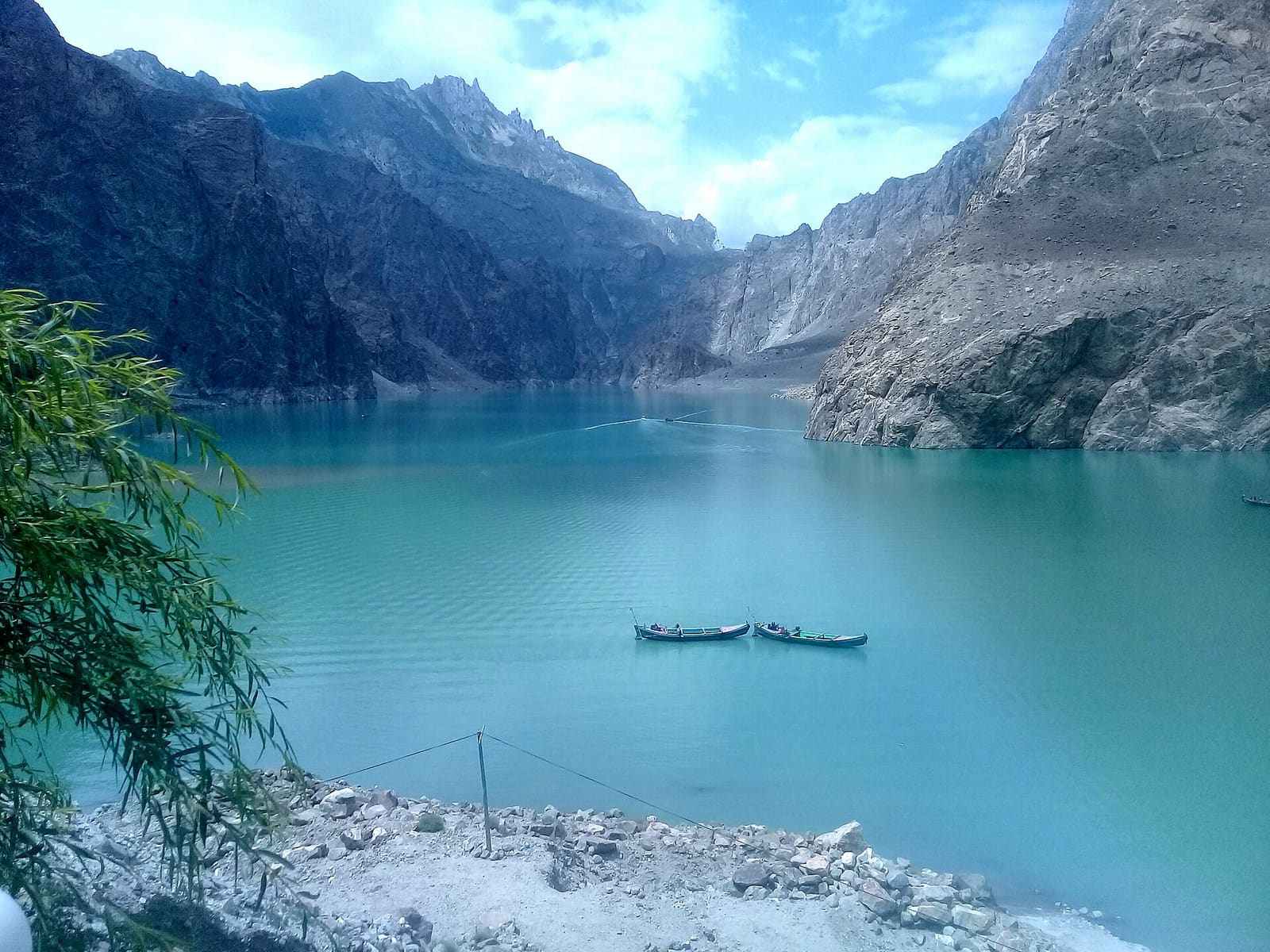
Turquoise water of Attabad Lake, Hunza
Peracha1 · CC BY-SA 4.0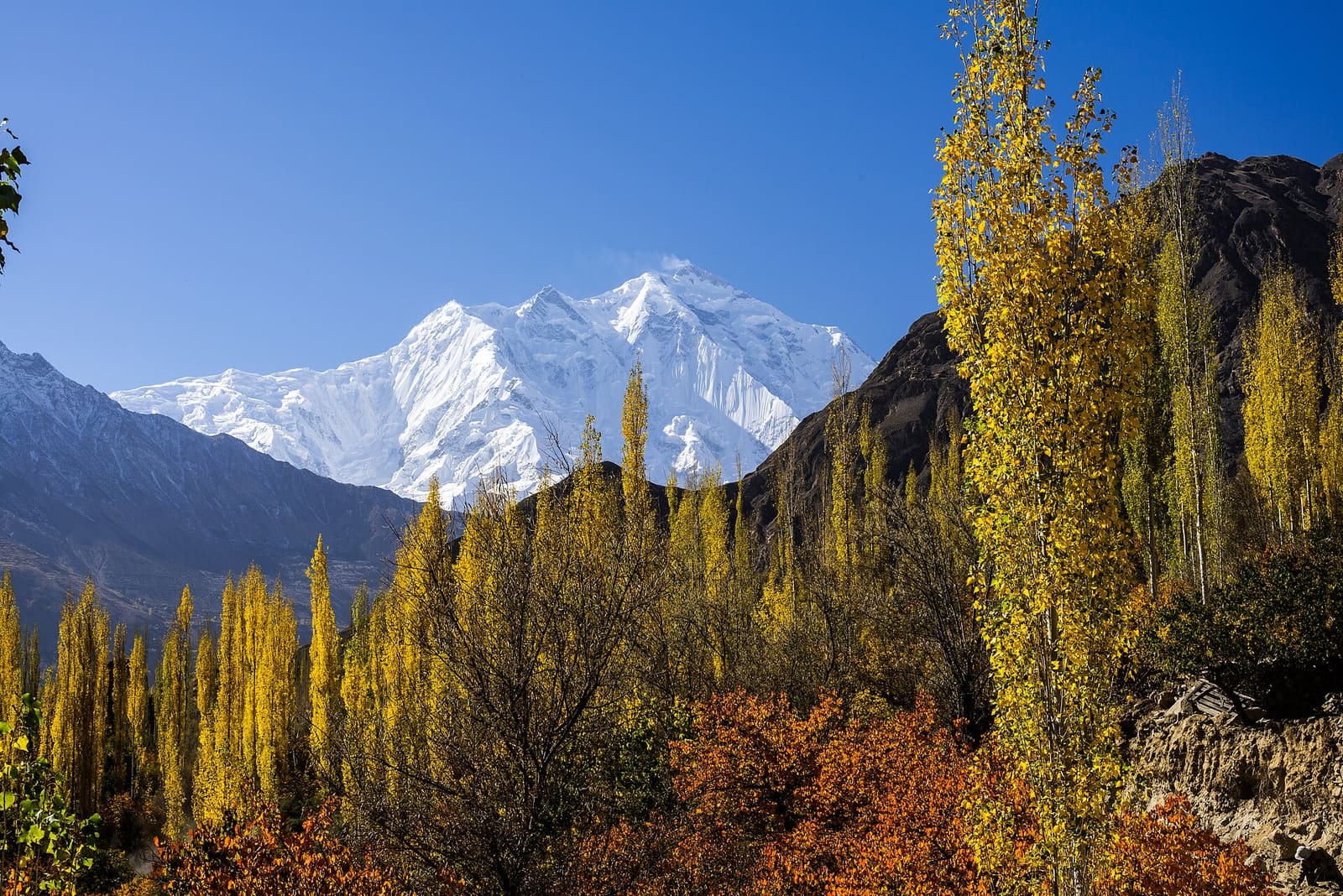
Rakaposhi above autumn poplars
mhtoori · CC BY-SA 4.0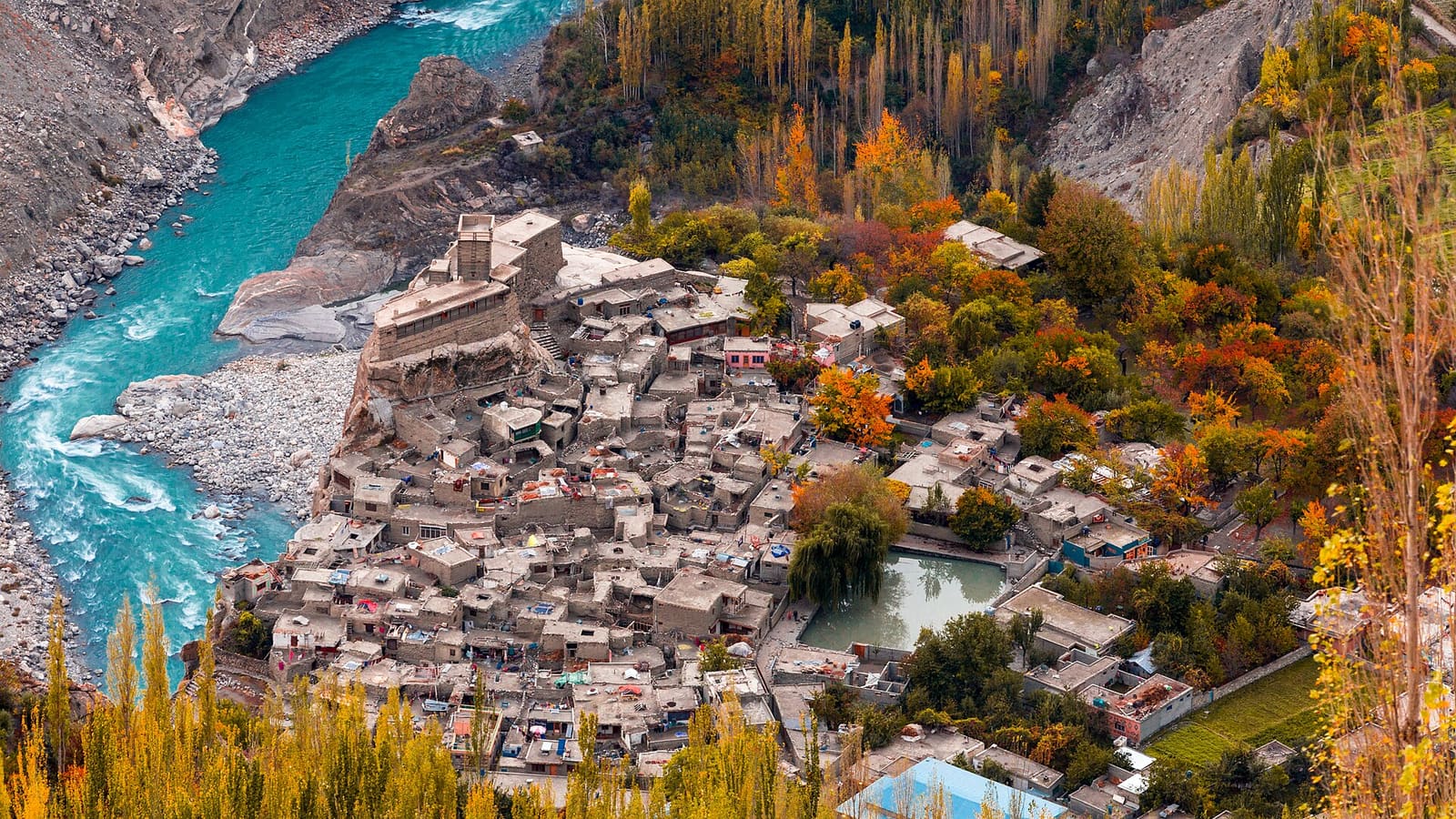
Altit village and the Hunza River in autumn
Syed Bilal Javaid · CC BY-SA 4.0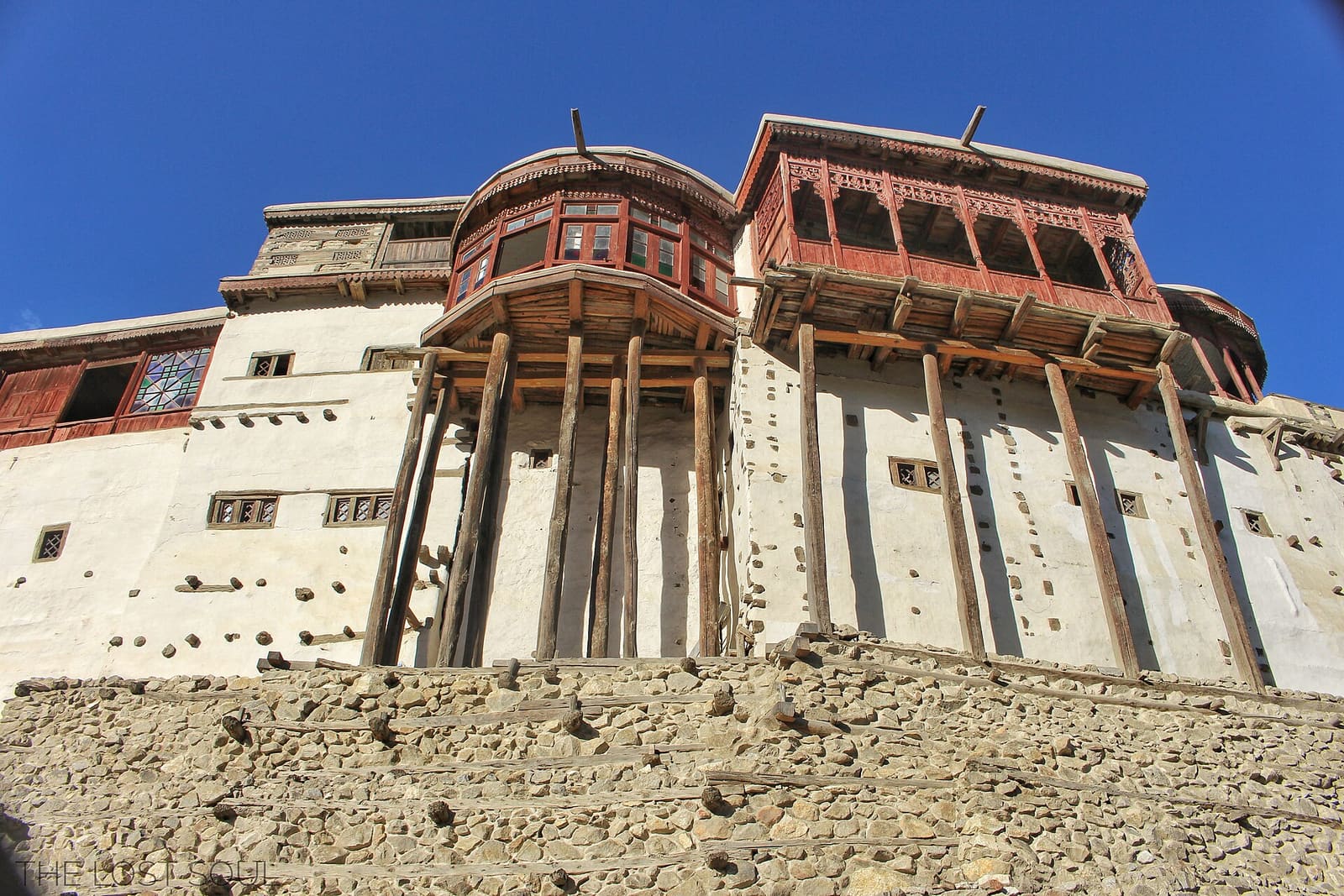
Baltit Fort, Karimabad
Fassifarooq · CC BY-SA 4.0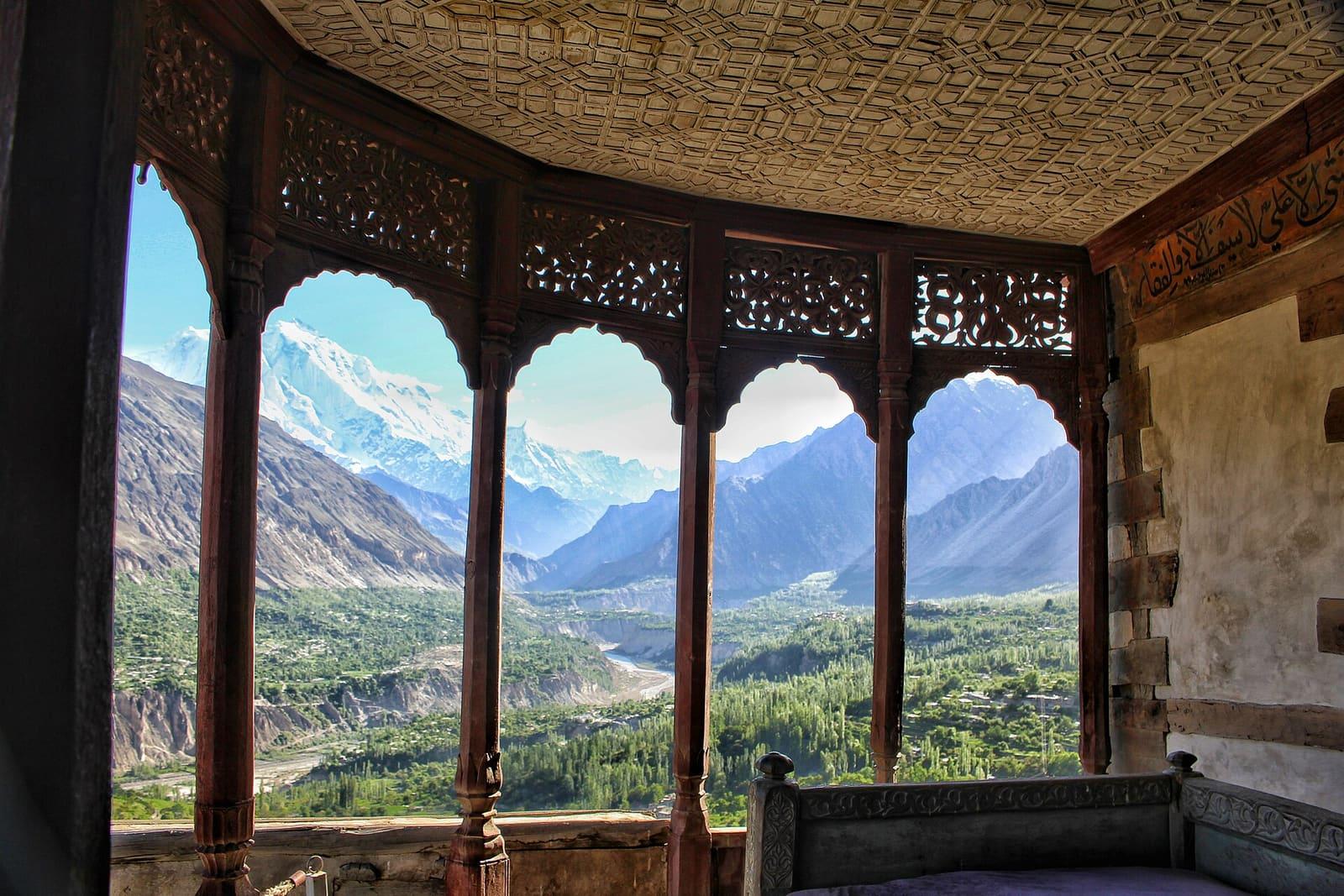
Hunza Valley seen from a window of Baltit Fort
Fassifarooq · CC BY-SA 4.0Each area suits a different kind of trip. Here's how they compare.
Best for: First-time visitors and view seekers
Karimabad is Hunza's main tourist village, built on a slope below Baltit Fort with views across to Rakaposhi. The bazaar has handicrafts, gemstones, cafés and dried fruit. Roads are steep and narrow, so confirm parking and access before you arrive, especially in a large vehicle.
Hotels in Karimabad →Best for: Practical stays, banking and road access
Aliabad is the valley's commercial and administrative town, right on the Karakoram Highway. It has banks, a hospital, shops and transport, and it is a short drive up to Karimabad. It is a sensible choice if you want easy road access or are arriving late.
Hotels in Aliabad →Best for: Quiet stays and village walks
Altit is an old village just below Karimabad, built around Altit Fort and its royal garden. It is calmer than Karimabad, with lanes, orchards and river views. It suits travellers who want a slower, village-style stay within easy reach of the main sights.
Hotels in Altit →Best for: Upper Hunza, Passu and Khunjerab trips
Gulmit is the main village of Upper Hunza, beyond Attabad Lake, with wide views and a quieter pace. It is well placed for the Passu Cones, the Hussaini suspension bridge, Borith Lake and the drive to Khunjerab Pass. It is cooler than central Hunza, so pack an extra layer.
Hotels in Gulmit →April to October is the main season, with spring blossom and autumn colours the most rewarding times to visit.
Cherry and apricot trees flower across the valley, a short and beautiful season. Nights are still cold, and some hotels are only just reopening.
Warm days, green fields and long evenings. This is peak season, with Eid and school holidays bringing heavy demand, so book well ahead. Monsoon rains further south can cause landslides on the Karakoram Highway.
Clear skies and golden poplars, usually at their best in late October and early November. Crowds thin and the light is ideal for photography.
Very cold, with snow on higher ground. Many hotels close, though some stay open with heating. The Khunjerab Pass is generally closed to visitors in winter.
The restored fort above Karimabad was the seat of Hunza's rulers for centuries. Guided tours explain its rooms, wooden carvings and history.
Older than Baltit, Altit Fort stands on a cliff above the Hunza River, with a peaceful garden and restored village around it.
A turquoise lake formed by a landslide in 2010, now crossed by tunnels on the Karakoram Highway. Boating and lakeside viewpoints are popular in summer.
A high viewpoint at Duikar above Karimabad, famous for sunrise and sunset views of Rakaposhi, Ultar Sar and the valley.
The jagged peaks at Passu are one of the north's most photographed sights. Nearby, the Hussaini suspension bridge is a thrilling walk across the river, best avoided in high wind.
The border crossing with China on the Karakoram Highway, at around 4,700 metres. Go slowly because of the altitude, and carry your CNIC or passport for checkpoints.
On the Karakoram Highway in Nagar, below Hunza, a roadside stop with a close view of Rakaposhi's face and a glacier stream.
A thick, round bread stuffed with spiced minced meat and onion, baked or fried until crisp. Small cafés and tea stalls around Karimabad's bazaar make it fresh at lunch, and it travels well for a long drive.
A dense, slightly sweet bread made from sprouted wheat flour and served with apricot oil or butter. It is traditional home food, so ask your guesthouse whether they can make it for breakfast with a day's notice.
Herbal teas made with local plants and dried fruit are served in most cafés, and older households still drink salty, buttery tea in winter. Try both: the herbal one after dinner, the salty one on a cold morning.
Fresh apricots ripen from late June into July, and the bazaar in Karimabad sells dried apricots, mulberries and walnuts all year. Apricot kernel oil is sold in small bottles and is used for cooking as well as on the skin.
Almost every café in Karimabad serves its own version, and it has become the snack most visitors remember. It goes well with a pot of herbal tea on a terrace in the afternoon.
Steamed meat dumplings show the valley's Central Asian links, and thin buckwheat pancakes eaten with butter or apricot oil are an old Hunza staple. Look for them in Karimabad and Gulmit, where some cafés specialise in traditional dishes.
Places to stay in Hunza on Roomly start from PKR 4,500 a night, and a typical night costs around PKR 11,000. Guest houses average about PKR 5,500. Rates change with the season and holidays, so confirm the final price with the property on WhatsApp.
Roomly lists 12 hotels, guest houses and apartments in Hunza, 6 of them verified by our team. You can message any of them directly on WhatsApp with no booking fee.
Plan at least three nights in Hunza itself: two for Karimabad, Altit and Eagle's Nest, and one for Upper Hunza and Attabad Lake. With the drive from Islamabad, a full trip usually takes seven to ten days. Add a day if you want to reach Khunjerab Pass.
Karimabad is the best base for first visits, close to Baltit Fort, the bazaar and the views. Altit is quieter, Aliabad is practical for road access, and Gulmit is ideal for exploring Upper Hunza and Passu.
Yes, the Karakoram Highway generally stays open and Hunza can be visited in winter, but it is very cold and many hotels close. Choose a property that confirms heating and hot water, and expect Khunjerab Pass to be closed to visitors.
Hunza is widely regarded as one of the safest and most welcoming places in Pakistan. The main risks are road conditions and altitude rather than crime, so travel by daylight, use an experienced driver and take breaks.
Blossom usually appears from late March to mid April, depending on the year and the village's height. Lower villages flower first, so the season moves up the valley over a few weeks.
Khunjerab is usually open to visitors from late spring to late autumn and closed in winter because of snow. Opening and closing dates are set each year, so check before planning your trip around it.


